

Article by Ivy Chepkorir
Probation is the work world’s “try before you buy deal. “
Both sides get to test the waters, but it’s
only official if it’s written down.
Probation is a legal tool used to assess a candidate’s suitability for the position and the business overall. Vital to note is that probation must be expressly stated.
Section 42 of the Employment Act 2007 provides that a probationary period shall not be more than six months but it may be extended for a further period of not more than six months upon the employee agreeing. It further prohibits employers from employing employees under a probationary contract for more than the aggregate period provided. It’s the work world’s “try before you buy”
deal. Both sides get to test the waters, but it’s only official if it’s written down.
Key to note, it further provides that a party to a probationary contract also has the liberty to erminate the contract by giving not less than seven
days’ notice of termination of the contract, or by payment, by the employer to the employee, of seven days’ wages in lieu of notice. Nevertheless, the
termination is still subject to the principles of fairness and procedural justice.
Just like all other employees, an employee on probation also has statutory entitlements like wages, leave days, safe work environment which on non -compliance during the pendency of their contract might attract repercussions upon termination.
COMMON EMPLOYER PITFALLS
- Failure to extend in writing:
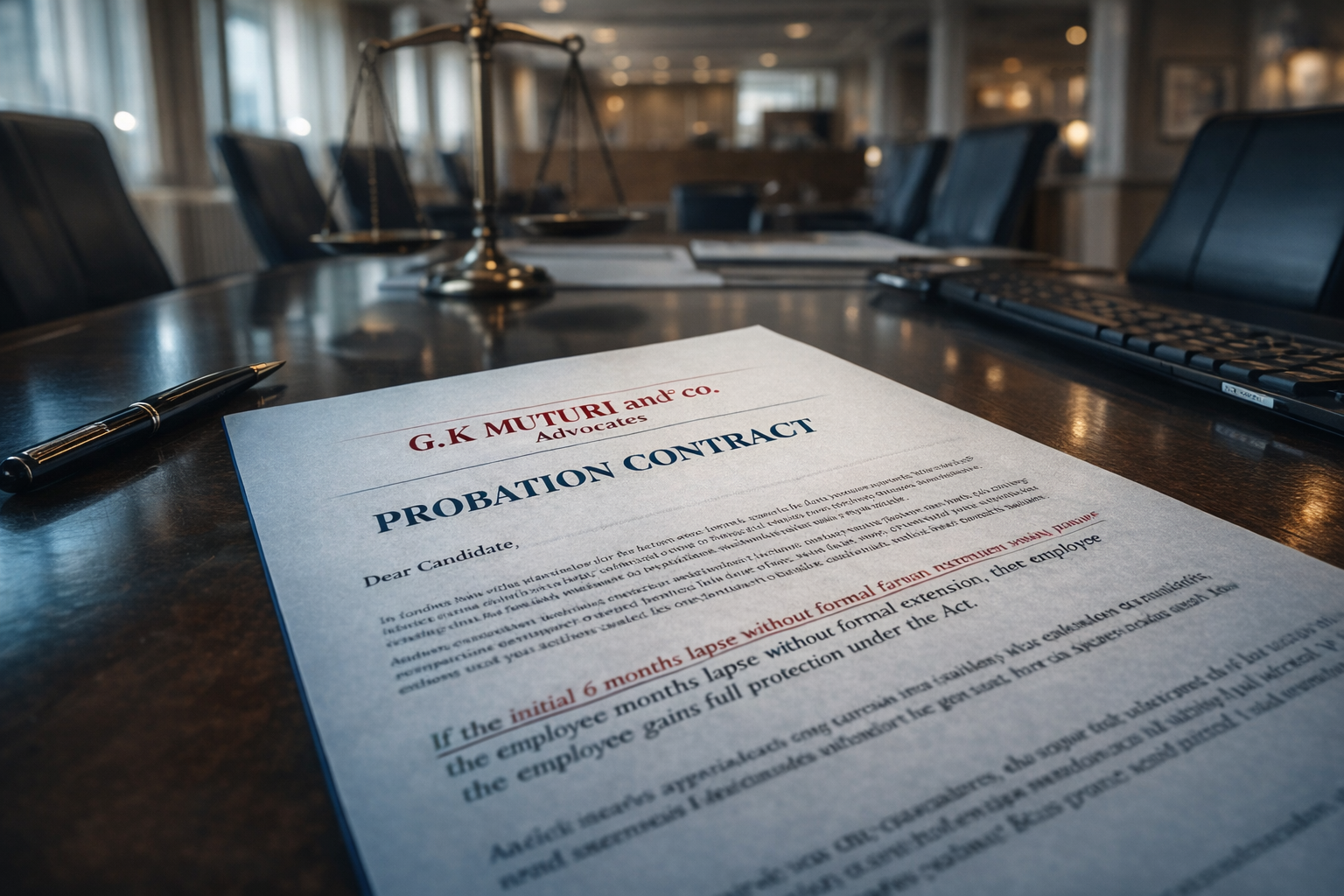
If the initial 6 months lapse without formal extension, the employee automatically gains full protection under the Act. - Abrupt dismissal without notice:
This exposes the employer to claims for notice pay (and possibly unfair
termination if the court feels due process was ignored). - Treating probation as “no rights zone”:
Employees on probation are still entitled to statutory rights –
including wages, leave accrual, and safe working conditions.
PRACTICAL TIPS
For Employers:
1. Put probation terms in writing, including duration and extension.
2.Keep short records of performance reviews.
3.If extending, do so before the initial period lapses.
For Employees:
1. Ask for clarity on how your performance will be measured.
2.Keep a record of feedback received.
3.Know that probation is not a license for unfair dismissal.
CONCLUSION:
Probation is not a loophole to fire at will. It is a structured period to
assess suitability, governed by clear rules under the Employment Act.
A well-managed probation saves both parties from unnecessary disputes –
and keeps the employment relationship clear.
NOTICE: The content of this alert is intended to be of general use only and should
not be relied upon without seeking specific legal advice on any matter.
For More Information, See our profile for contact details
Trusted advocates, Strategic minds, Excellent Results.

Leave a Reply